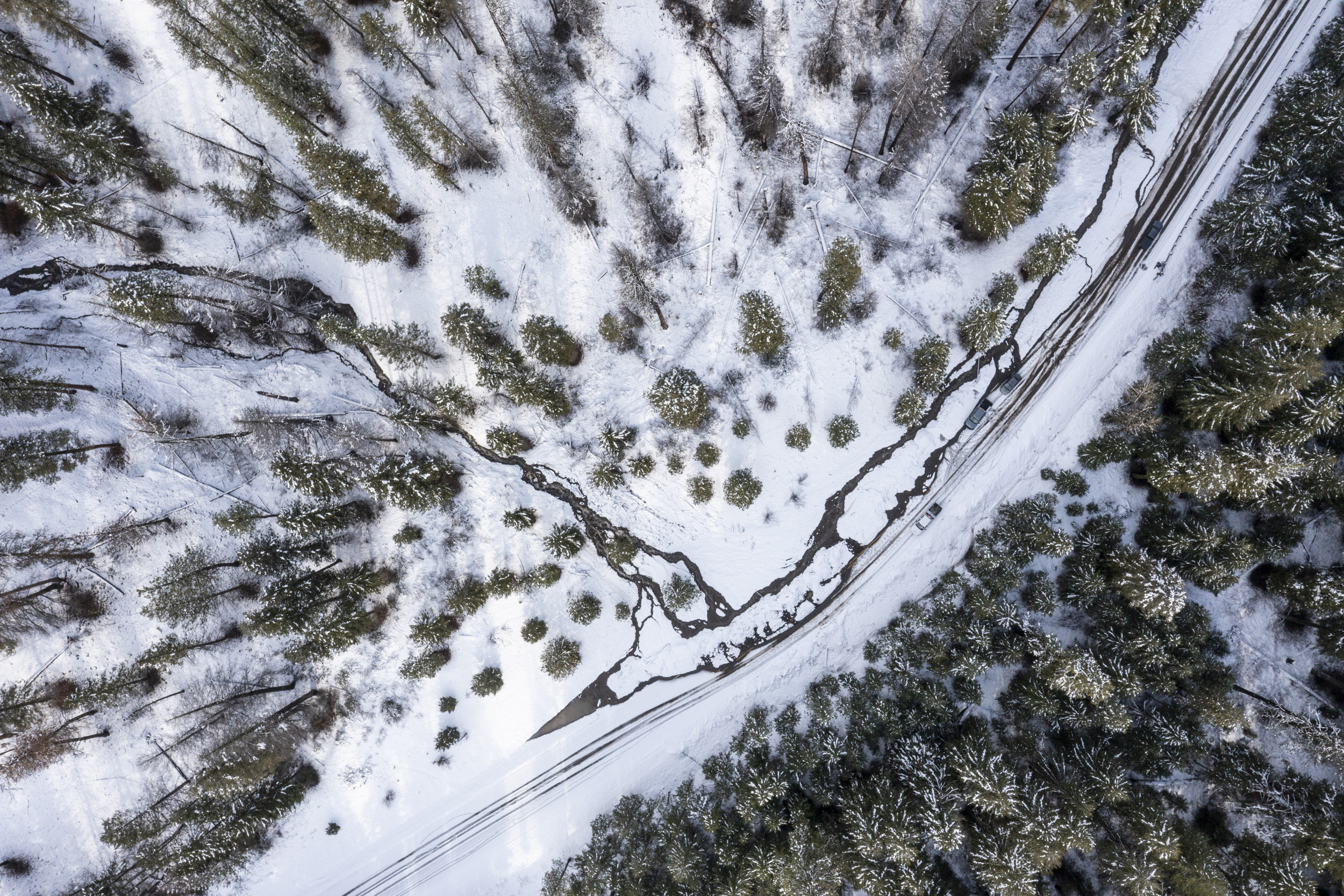
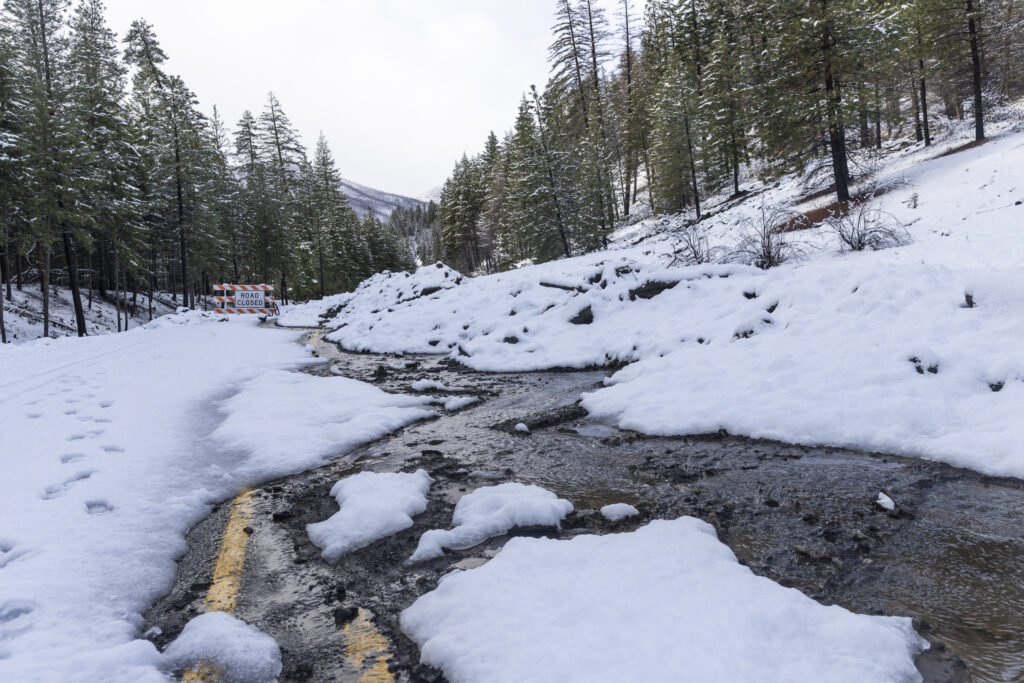
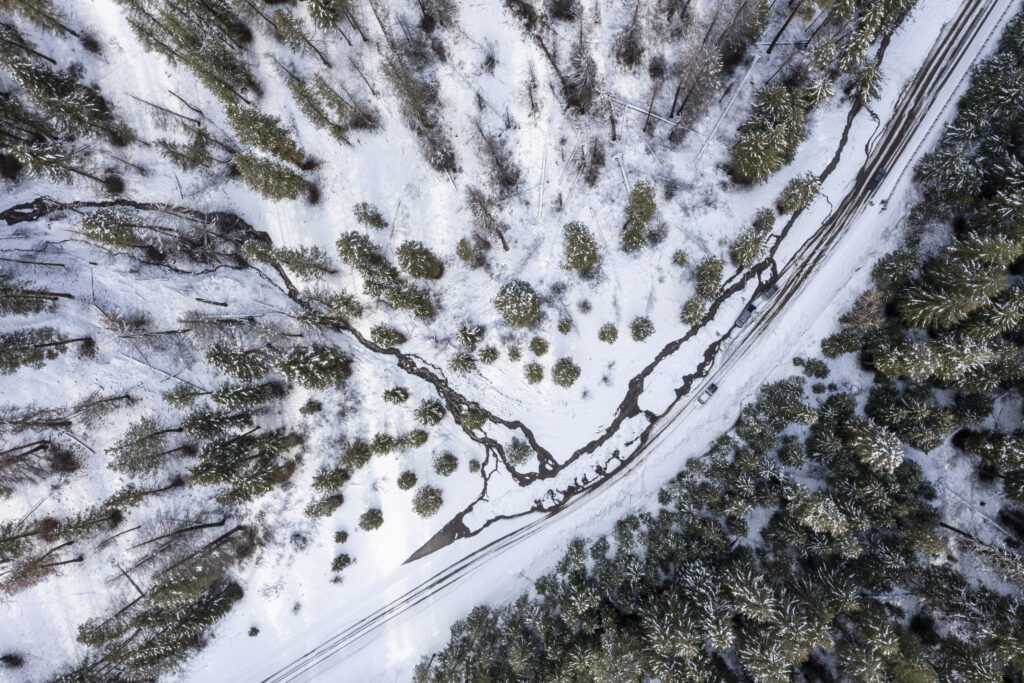
Our field work is never straightforward due to the remote and rugged country where wolverines can be found, but this season has begun with significant challenges for winter wolverine monitoring. Primarily, a large atmospheric river made possible by the warming climate brought historic rainfall and flooding to Washington state in early December. Communities around the Cascades were hit hard. Significant damage was wrought on infrastructure such as highways and bridges across the state. Our partner Holden Village lost road access to Lake Chelan due to large mudslides. It will take months to clear the road and reopen the remote village.
In the Methow Valley, several mudslides slathered Highway 20 in mud and debris from the Cedar Creek fire, blocking access to Silverstar SnoPark, from which we access three of our stations. More mudslides and wet avalanches sloughed over the road to Harts Pass, making the snowmobile approach to three more of our stations rather dicey for our tastes. Around Christmas, hundreds of trees plastered with snow fell throughout the Methow Valley, impeding people and outdoor access even further.
We had so many questions – how would we deploy our field stations this winter? What could this unseasonal weather mean for wolverines? How might wolverines respond to such a different blend of human and climate impacts from other years, such as a drop in humans recreating at high elevations in our local watershed due to access problems and snow conditions?
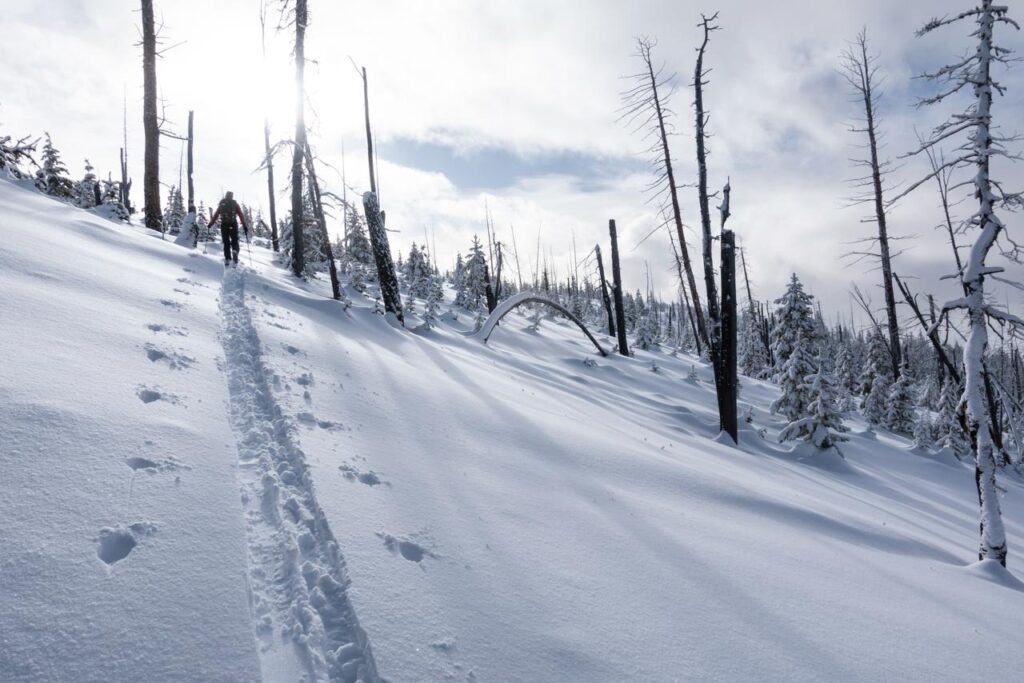
Thankfully, by the first week of January, Steph and Dave were able to deploy our eight Methow Valley wolverine monitoring stations, thanks in part to a big effort by the Department of Transportation to clear Highway 20 to Silverstar Snow Park. Our incredible volunteer Adam C U got our stations near Mt. Shuksan up and running for the season. We are still figuring if we can return to Holden Village to continue monitoring the active wolverine population there.
As we grieve the impacts of climate change on our communities and our wild neighbors, we also look forward to seeing what data we can collect about how this unusual winter will impact wolverines. Our hearts go out to those who are still grappling with destruction. One bright spot on our horizon is a live event we are doing on February 18th at 6:30 pm at Icicle Brewing in Leavenworth – perhaps you can join us!