
Our Annual Fundraiser Begins Now!
We’re gearing up for another winter and it’s shaping up to be an exciting one. We’ll be maintaining long term monitoring stations, upping the ante on community outreach, and working on wolverine storytelling through creative new avenues.
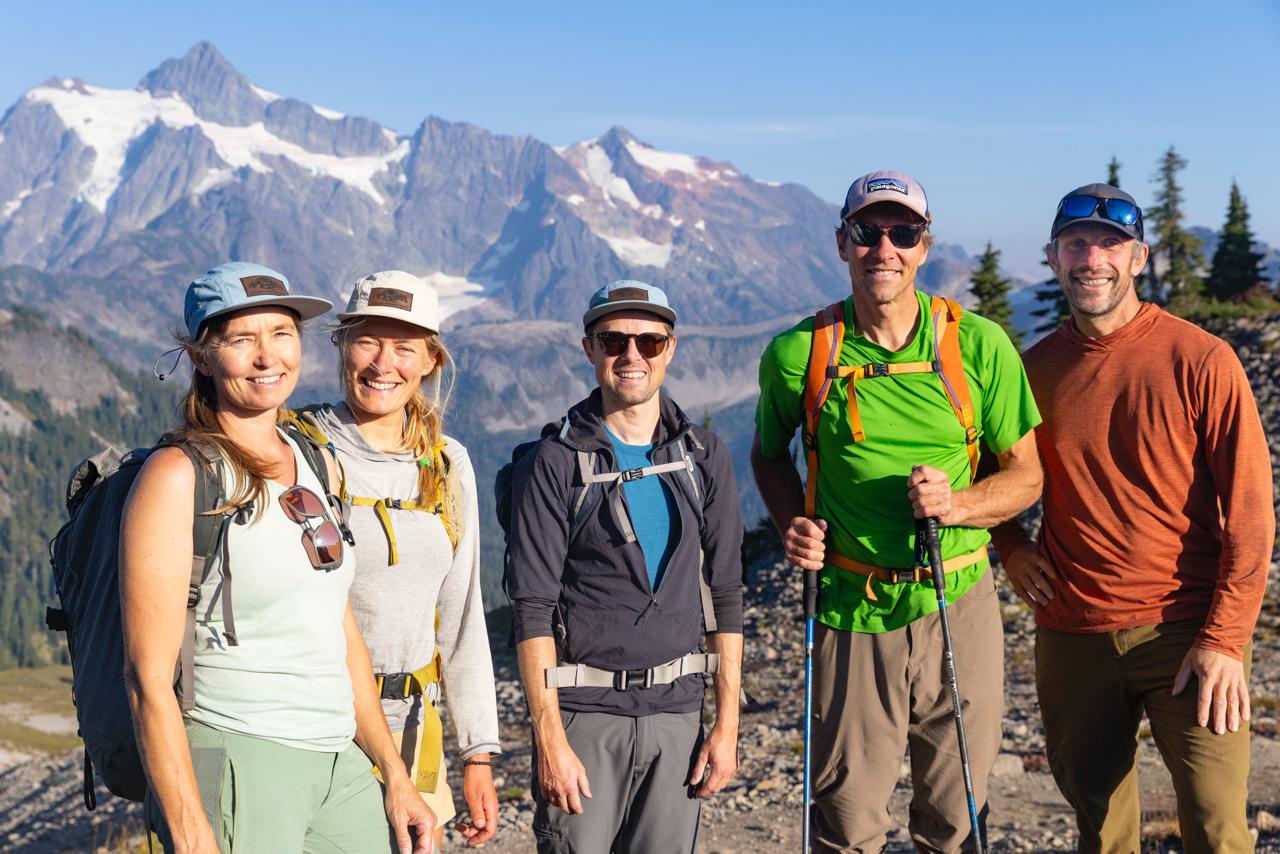
To kick it off, generous supporters Kevin & Cassandre McGowan (pictured to the right) have promised a $10,000 MATCH.
Any amount large or small up to $10,000 will be DOUBLED and put to use this winter in wolverine country. Donations can be made three ways:

- Donate via Conservation Northwest. Your contribution will be Tax-deductible.
- Support us through Patagonia Action Works. This option is not tax-deductible.
- Give directly through our GoFundMe page. This option is not tax-deductible.
We’re very grateful to do this work with your support!
Oct. 20th Field Notes: Snowpack
by CWP’s snow wizard, Drew Lovell
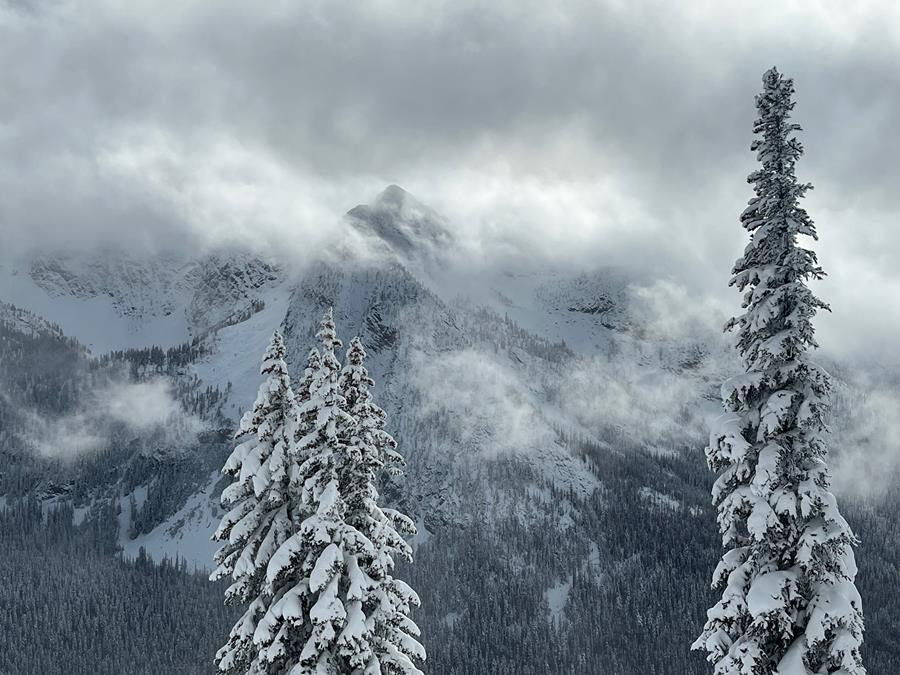
At the time of this writing, our local mountains hold nearly half a meter of October snow above 6000 feet. Human travelers have already been sliding (lightly!) on skis. The golden needles of alpine larch intact upon their branches add rare color to the snowscape. Certainly, the wolverines are out laying tracks in these early winter conditions. They weather the storms, persist through the droughts, and continue to find food and refuge where they can.
For winter recreationists and wolverine researchers alike, the prelude to winter can bring both excitement and trepidation. Together, we all thrive with a deep winter snowpack, which persists well into late spring. The reality, however, is that we can expect shallower winter snowpacks, which melt earlier in the spring, in the coming years. In the Cascades, contributing patterns include January droughts, high elevation rain events, and acute spring warming events.
Experienced backcountry skiers acknowledge an increasing trend of persistent mid-winter stretches of high pressure– the dreaded January droughts. Compounding these dry, warm periods are regular high-elevation rain events, often associated with plumes of subtropical moisture that bring rain to all but our highest peaks, known as atmospheric rivers. These two phenomena can have devastating impacts on regional snow depths. Finally, as spring arrives earlier, it’s often accompanied by anomalous and drastic warming. This tends to reduce the persistence of spring snow cover, which poses a challenge to denning wolverines.
Of course, there will be variability. Some years will be better than others! Recent weather discussions point to a relatively cold and snowy start to the winter in the North Cascades. Fingers crossed, skis waxed; we are ready!